
Self-tracking tech revolution? Not so fast…

When the report called Tracking for Health was released last month, media headlines announced:

“Over Two-Thirds Track Health Indicators!”

This statistic, borrowed from the Pew Research Center’s Internet & American Life Project’s report, referred to the 69 per cent of people who say they keep track of things like their weight, exercise, heart rate, food, stress or other health indicators. It also, however, includes almost half of self-reporting trackers who, according to Pew’s Susannah Fox, track these health indicators for themselves or others  – but only in their heads.

Surprisingly, very few headlines ran the real news from the report:

“Only 21% Use Technology to Self-Track!”  Continue reading

“Heads they win, tails we lose”: the corruption of science

It’s 2003. The American Academy of Pediatric Dentistry accepts a $1 million donation from Coca-Cola. That same year, the group announces  that scientific evidence is certainly not clear on the exact role that soft drinks play in terms of children’s oral disease.”  This statement, according to a report from the Center for Science in the Public Interest, directly contradicts the AAPD’s previous stance: Consumption of sugars in any beverage can be a significant factor that contributes to the initiation and progression of dental caries.”

Yes, I guess it could be purely coincidental that the AAPD decided to contradict what every parent with even a tiny shred of common sense already knows – at the very same time they’ve just inked the $1 million Coca-Cola deal.

But really? Seriously?  Continue reading

When does mindfulness become mind-numbing?

Dr. James Beckerman  is a cardiologist with the Providence Heart and Vascular Institute in Portland, Oregon.

And he’s also a jock. He serves as the Vice-Chair of the Oregon Governor’s Council on Physical Fitness and Sports, as well as the team cardiologist for the Portland Timbers major league soccer team.

In a recent article, he tells the sad story of the time the running watch that tracked his regular runs stopped connecting to the USB port on his computer.  Continue reading

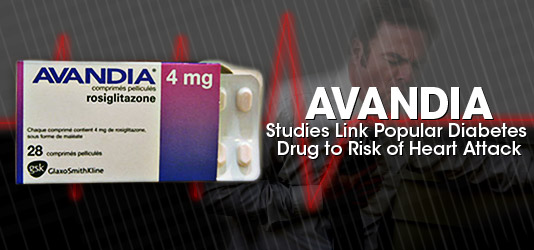
Avandia: a very short history of a very bad drug

The drug giant GlaxoSmithKline’s controversial diabetes drug Avandia (generic name rosiglitazone) works by helping diabetics balance their blood-sugar levels. But since its inception, it has been found to increase the risk of heart attacks and strokes — and even death.

As many as 100,000 heart attacks, strokes, deaths and cases of heart failure may be directly attributed to Avandia since the drug was launched in 1999, according to FDA scientist Dr. David Graham.  Yet physicians are still prescribing the drug to nearly half a million people, which translates into approximately $900 million in annual sales for GSK.  How has this been allowed to happen? Let’s take a look at the history of this potentially lethal but still-legal drug, courtesy of PBS: Continue reading