
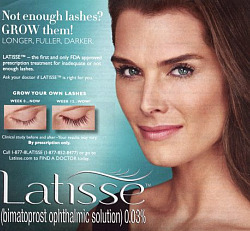
 Allergan’s Latisse is an eyelash-growing drug prescribed to treat a condition called hypotrichosis. This is a condition of no hair growth (not to be confused with the condition of alopecia, which describes hair loss where formerly there was hair growth). That’s not how Allergan chose to describe the condition of hypotrichosis on its Latisse Patient Information sheet:
“Hypotrichosis is another name for having inadequate or not enough eyelashes.”
But as John Mack astutely notes in Pharma Marketing News:
“I imagine asking a woman if she has ‘adequate’ or ‘enough’ eyelashes is like asking a man if he has a ‘big’ enough or ‘hard’ enough penis. It is unlikely, therefore, that any woman wouldn’t want to try Latisse at least once.”
How then to get more women to ask more doctors to help sell more of this eyelash-growing drug? Hire a famous person to pitch your product! Enter professional celebrity-for-hire (Volkswagen-Ford-Coppertone-LaZBoy-Colgate-Tupperware) Brooke Shields, who explains on her Latisse video diary how she also became a paid shill for this Allergan drug: , Continue reading
 Forbes ran an interesting piece last month on the fine line in Big Pharma between promoting a new drug and presenting a misleading picture of its risk and benefits. In fact, the American Food & Drug Administration regularly singles out drug companies that use questionable language to imply or suggest their drug is superior to similar treatments, and watches closely for the omission of dangerous risk and side effect information. Forbes recently ran an online slide show of the 10 most misleading drug ads that have been slapped with FDA warning letters.
 The Ethical Nag